
Skimmer already knows every route stop your techs finish and every work order they close. FieldPay's job is to turn that completed work into a payout request — automatically, the same day. Here's exactly how the setup works, screen by screen.
To get there: select the icon with your company name in the upper right corner of Admin, then go to Integrations → Skimmer.
Step 1: Connect your Skimmer account
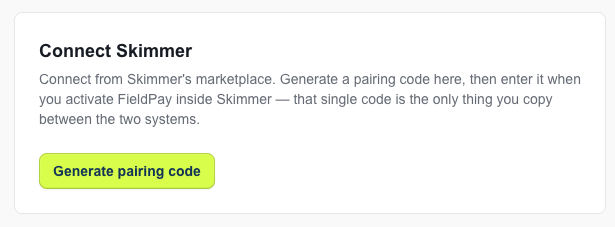
FieldPay generates a pairing code for you to enter during activation in Skimmer's marketplace, and the two systems link up. That single code is the only thing you copy between the two systems.
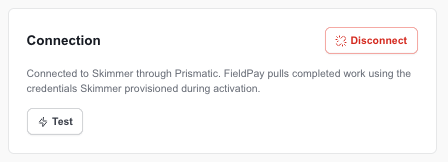
Once connected, the Connection card confirms it, and a Test button lets you check the link is live at any time.
Step 2: Choose your payable categories
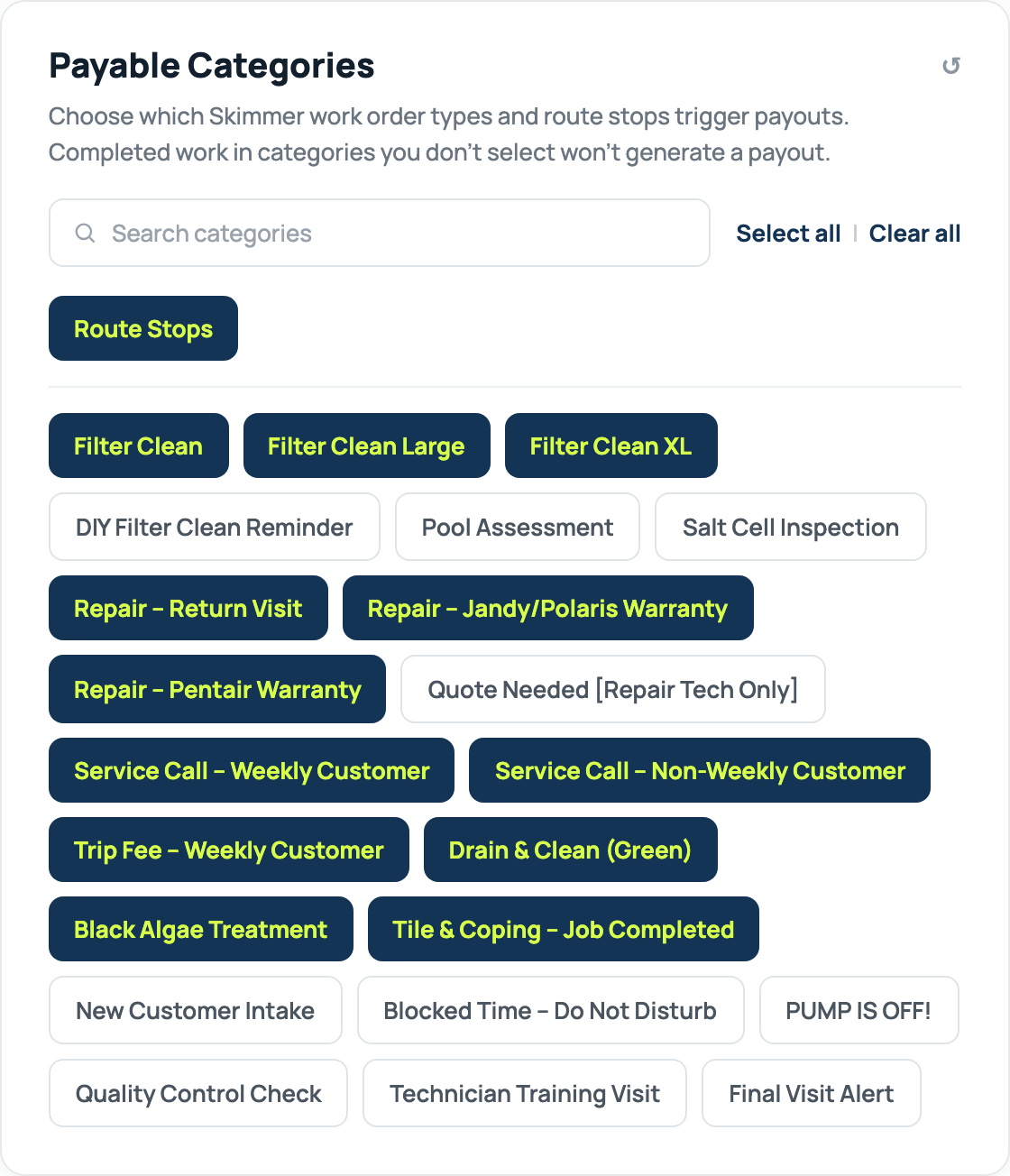
In the Payable Categories card, you pick which of your Skimmer work order types — Repair, Service Call, Filter Clean, or whatever categories you run — actually generate a payout when completed. Route Stops get their own category, priced from the service location's labor cost.
Completed work in a category you haven't selected is evaluated and skipped; it never becomes a payout request. Leave everything unchecked and FieldPay tells you so directly: "No categories selected — no work will trigger payouts." Use Select all / Clear all to move fast, or search to find a specific category.
Every category you select also needs a labor cost configured in Skimmer — a completed item with no labor cost never becomes a payout request, so set it before turning anything on.
Step 3: Preview before you go live
Before any payout is created for real, run a Preview. Set your Look back window — how many days of completed Skimmer work to evaluate — and FieldPay walks through every item in that window using the same pricing and eligibility logic it would use live, without creating a single payout request. You see exactly what would have been paid, to whom, and for what, so you can sanity-check your payable categories before anything touches your queue.
Configure labor costs in Skimmer first. FieldPay only turns an item into a payout request if it has a labor cost in Skimmer at the moment it's completed — set this before you go live:
- Route stops: Customers → Service Rates (upper right) → Configure Labor Cost
- Work order types: Settings → Work Order Types → Labor Cost
Update either one any time before a job is marked complete and the correct amount will sync — nothing to do on the FieldPay side.
Step 4: Turn on sync
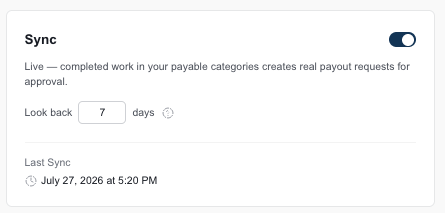
Happy with the preview? Flip Sync on. FieldPay processes your look-back window for real this time — completed work in your payable categories starts creating real payout requests for approval — and from then on keeps syncing automatically, no need to re-run anything manually. The Last Sync timestamp on the card always shows you the most recent pass.
Step 5: Auto-invite techs
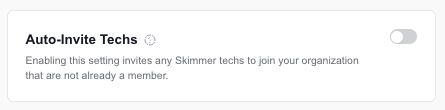
If a tech completes Skimmer work but hasn't joined FieldPay yet, turning on Auto-Invite Techs sends them an invite automatically the moment their work is picked up — no manual roster entry.
What happens after go-live
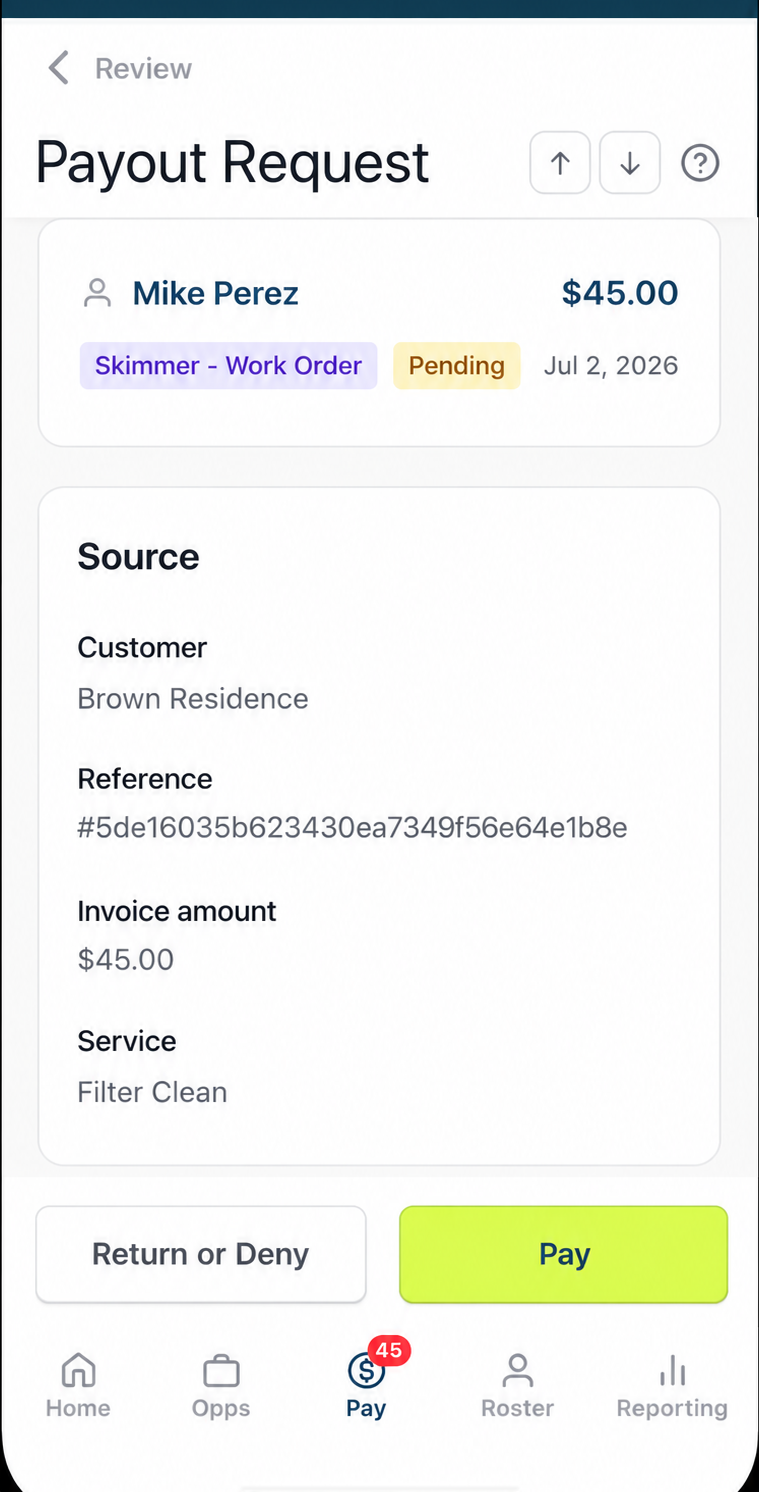
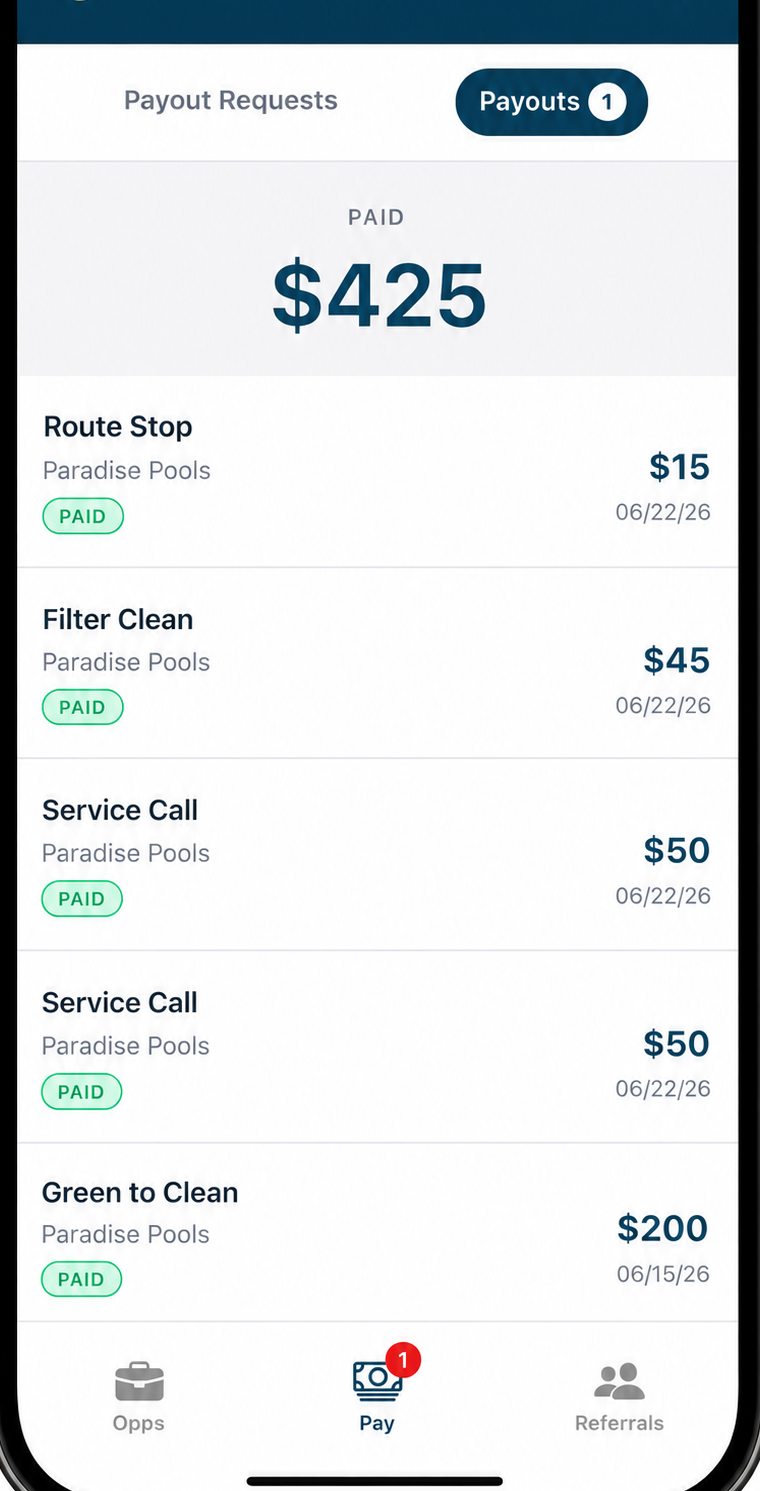
From here it's hands-off. A tech finishes a filter clean, a repair, a route stop — whatever you've marked payable. FieldPay creates a payout request with the customer, service type, and amount already filled in from Skimmer's own data. It lands in your queue, you review and approve, and your tech is paid the same day.
Next steps
That's the whole setup — connect, choose categories, preview, go live, and let auto-invite fill in the roster. Want to see it running against your own Skimmer account?